Join 1k+ other forward-thinking professionals who receive the weekly newsletter, where I provide actionable strategies, insights and tools to escape the grind and build influential, future-proof careers. Sign up to get a FREE copy of my 5-Stage playbook to multiply your impact and build a career that AI can't replace.
Automate Your Deep Work Hours (While Eliminating Distractions)
|
Why This Playbook Matters You want to get things done but Slack pings, YouTube rabbit holes, and endless browser tabs keep hijacking your time. Focus shouldn't rely on willpower. This playbook helps you automate discipline using a Deep Work Scheduler. With just a few tools, you’ll auto-schedule focus time, block distractions, and log your output. You’ll feel less busy and actually get more done. Implementation Guide Step 1: Schedule Deep Work on Google Calendar Objective: Set aside blocks of time for distraction-free focus.
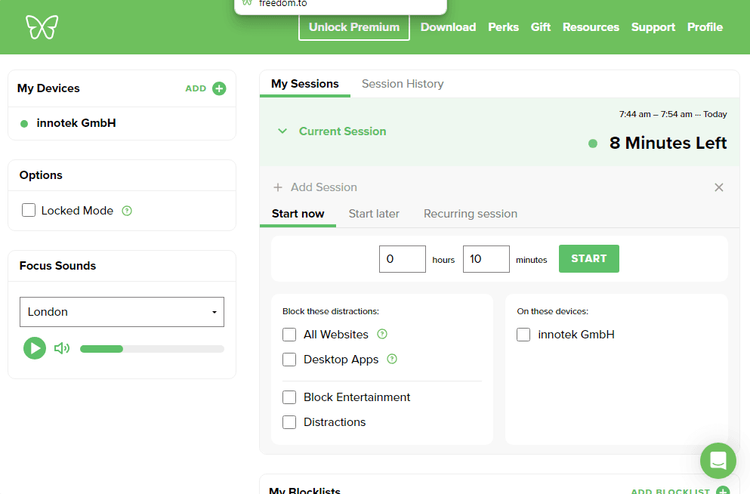
📌 Pro Tip: Color-code these sessions so you instantly know they’re sacred. Step 2: Connect Calendar to Freedom.to Objective: Automatically block distractions during your Deep Work time.
📌 Tip: Name your Freedom session “Deep Work Auto-Block” for clarity.
Objective: Track how much time you actually stay in deep work. • Open Zapier. • Create a Zap: Trigger: “Google Calendar Event Starts” → Filter: event title contains “DEEP WORK” Action: “Google Sheets → Create Row” • Log data like: ✅ Date ✅ Start Time ✅ End Time ✅ Duration (Zapier can calculate this) 📌 Bonus: Use the data to see weekly trends in your focus performance. Final Thoughts Your calendar is your strategy. Your environment is your leverage. With this system in place, you're not relying on motivation—you’re relying on automation. ✅ Focused output ✅ Zero distraction ✅ Time to build what matters |
The Influential Engineer
Join 1k+ other forward-thinking professionals who receive the weekly newsletter, where I provide actionable strategies, insights and tools to escape the grind and build influential, future-proof careers. Sign up to get a FREE copy of my 5-Stage playbook to multiply your impact and build a career that AI can't replace.
In June 2024, a former OpenAI researcher named Leopold Aschenbrenner published a 165-page essay arguing that the coming age of artificial intelligence would demand an enormous build-out of physical infrastructure. Chips, memory, electricity and data centers would all be needed in quantities the world had not planned for. He then turned that argument into a hedge fund called Situational Awareness, and the fund bought the thesis heavily, owning the companies that supply the AI boom while...
In the autumn of 1903, most sensible people would have bet on Samuel Langley. He was Secretary of the Smithsonian Institution, holder of a contract from the United States War Department, and the beneficiary of a research budget that dwarfed anything his rivals could muster. He had engineers, publicity and by the standards of the day, everything a man could want in a race to conquer the air. On October 7th his flying machine, a 54-foot contraption launched by catapult from a houseboat on the...
In the late 1800s, a young man named Charles Schwab took a job as a day laborer in one of Andrew Carnegie's steel plants. The work was unglamorous. Nobody was watching him closely and certainly nobody expected anything from him beyond the narrow list of tasks tied to his wage. Schwab did the work anyway, and then he did more. He stayed late without being asked. He learned parts of the operation that had nothing to do with his job description. He carried a good attitude into work that most...